How to Optimize Existing Content With AI for Better Rankings
Learn how to use AI-powered tools to audit and optimize your existing content library. From identifying underperforming pages to rewriting for better rankings with G-Smart optimization.
Sarah Chen
Head of Content Strategy
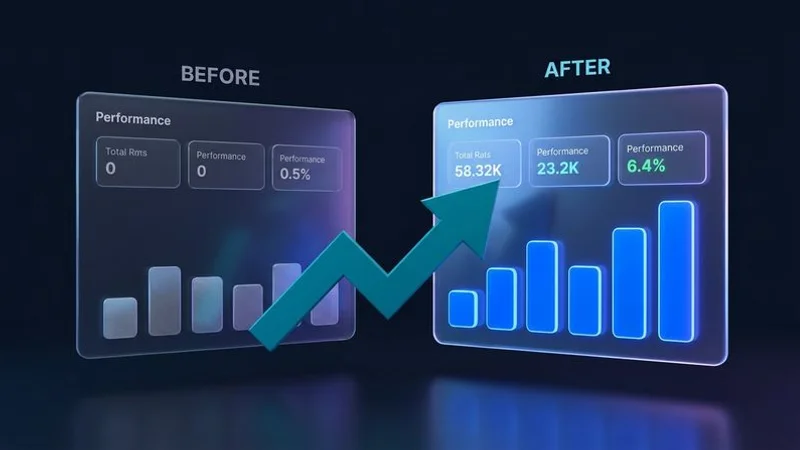
From what we have seen, that initial push to publish new content often overshadows the goldmine sitting right in your archives. Learning how to optimize existing content with AI: audit, analyze, and improve rankings is essential for sustainable growth.
Malaysia’s digital economy surged to US$39 billion in 2025. That growth means more competition, making it harder than ever to rank fresh pages.
When our founder Adam Yong started this AI SEO writer after nearly two decades in the SEO trenches, he realised a fundamental truth about search engines. Existing content has built-in advantages like domain authority, indexed pages, and accumulated backlinks that new content completely lacks.
We will break down why refreshing your old posts is your fastest path to traffic growth.
Let us look at the data, what it is actually telling us, and then explore a few practical ways to respond using AI tools.
Why Existing Content Optimization Delivers Outsized Results
When you publish a new article, it starts from zero. No authority, no indexing history, and zero external links mean it must earn every ranking signal from scratch. A May 2025 study from Ahrefs revealed that a mere 1.74% of newly published pages reach Google’s top 10 results within their first year.
That statistic is a wake-up call for content teams. The same study found that the average number-one ranking page is actually five years old. Existing content that has been live for months or years has already accumulated signals that Google values:
- Crawl history: Google has indexed and re-crawled the page multiple times, establishing a baseline understanding of its topic.
- Backlink profile: Other sites may have linked to the content, providing necessary authority signals.
- User engagement data: Google has click-through rate, dwell time, and pogo-sticking data from real users.
- Topical association: The page is already associated with specific topics in Google’s index.
We know that optimising this existing content leverages these accumulated signals. A well-optimised refresh of an existing page can jump from position fifteen to position three far faster than a new page can climb from unindexed to the same position. With Google holding a massive 92.35% search market share in Malaysia as of 2025, capitalising on its existing crawl data is your safest bet for rapid gains.
Step 1: Identify Content That Needs Optimization
Not every page benefits equally from a strategic refresh. Focus your efforts on content with the highest improvement potential.
High-Potential Targets
You should prioritize pages ranking in positions 5 through 20. These are close enough to page one that incremental improvements can push them into high-traffic positions.
According to 2025 search data, the top three organic results capture roughly 68.7% of all clicks. Pushing a page from position six to position three will drastically change your traffic volume.
Look out for these specific high-value targets:
- Pages with declining traffic: Content that previously performed well but has lost rankings as competitors published fresher coverage.
- Pages with high impressions but low CTR: Google is showing your content, but users are ignoring it.
- Thin content on valuable keywords: Pages targeting good keywords but providing insufficient depth to compete.
Our team heavily relies on Google Search Console to find those high-impression, low-click anomalies. A low click-through rate often suggests the meta information or content preview needs immediate improvement.
Low-Priority Targets
Pages ranking beyond position 50 likely need more than a simple optimisation pass. They may need fundamental repositioning or a complete rewrite.
Do not waste resources optimising content for keywords nobody searches for, regardless of the tools you use. You can use tools like Ahrefs or the Semrush Malaysia database to verify if a keyword actually has search volume before dedicating time to it.
- Pages on irrelevant topics: Content outside your core expertise is better removed than optimised.
- Zero-volume keywords: Traffic potential must exist to justify the effort.
- Cannibalized pages: If two pages compete for the exact same term, merge them instead of optimising both.
Step 2: How to Optimize Existing Content With AI: Audit, Analyze, and Improve Rankings
AI optimisation tools analyse your existing content against current SERP conditions. This step is critical because the competitive landscape changes constantly.
Content that was comprehensive when published may now be missing topics, entities, or depth that newer ranking pages provide.
What a Good AI Audit Reveals
A high-quality audit maps your content directly against Google’s Search Quality Rater guidelines. You need to know exactly where your page falls short compared to the top performers.
We look for these specific insights during an audit:
| Audit Metric | What It Reveals | Action Required |
|---|---|---|
| Content score | How your content measures up for entity coverage and comprehensiveness. | Add missing semantic terms. |
| Missing entities | Semantic concepts that ranking competitors cover but your content ignores. | Integrate new subtopics naturally. |
| Structural gaps | Sections or H3 subheadings that competitors address but your content skips. | Create new sections to match intent. |
| Word count | Whether your content provides sufficient depth relative to the competition. | Expand thin paragraphs with facts. |
Our experience shows that heading structure comparison is just as vital. Analysing how your content organization compares to ranking pages helps you fix abrupt transitions and poor flow.
Using G-Smart for Intelligent Optimization
G-Smart Optimizer analyses your existing content against live SERP data to generate targeted recommendations. Rather than rewriting your entire article blindly, it identifies specific sections that need improvement and suggests precise changes.
The system evaluates your text against Google’s Helpful Content Guidelines. It helps resolve common issues like weak context and a lack of E-E-A-T (Experience, Expertise, Authoritativeness, and Trustworthiness).
The G-Smart approach works through three distinct modes:
- Enhance Mode: This setting improves clarity and adds minor context while preserving your original tone and structure.
- Extensive Mode: This deeper polish rephrases and restructures sentences for stronger readability and flow.
- Research Mode: This powerful option expands content with new related topics and includes citations to support new information.
This targeted approach is incredibly efficient. Combining G-Smart with competitor analysis tools preserves the elements of your content that are already working while systematically addressing specific weaknesses.
Step 3: Prioritize and Implement Changes
Once your audit identifies optimisation opportunities, you must prioritize changes by their expected impact.
High-Impact Changes
Adding missing sections that cover topics all top competitors address is your highest priority. You must also expand thin sections where your coverage is significantly less detailed than the competition.
Updating outdated information is non-negotiable for maintaining trust. Replace old statistics, dead tool recommendations, and outdated best practices with current facts.
We always focus on improving the introduction to better match search intent and reduce bounce rates. Adding structured data, like FAQPage or Article Schema markup, is also crucial. Google Malaysia announced that AI-powered ads will appear in AI Overviews later in 2025, making structured data essential for visibility in these new search features.
Medium-Impact Changes
Improving internal linking connects your optimised content with related pages on your site. You can use plugins like Link Whisper to find these internal link opportunities quickly.
Refreshing meta titles and descriptions will directly improve your click-through rates. With position one CTR dropping to around 19% recently, a compelling title is your best defense against losing clicks.
Visual elements are vital for keeping users engaged.
- Add localized images or diagrams.
- Include mobile-responsive tables.
- Restructure headings to match the question patterns users search for.
These visual upgrades are especially important here, as 97% of Malaysians access the internet via mobile devices.
Lower-Impact Changes
Minor wording improvements for readability and flow provide a final polish. Formatting enhancements like bullet points, bold text, and strategic white space make the text scannable.
Adding author bios and specific credentials strengthens your E-E-A-T signals. These small touches build trust, even if they do not directly spike your rankings overnight.
Step 4: Measure and Iterate
Content optimisation is never a one-time task. After implementing your changes, you need to track performance over the following four to eight weeks.
We recommend monitoring these specific metrics:
- Ranking position changes for target and related keywords.
- Organic traffic delta compared to the pre-optimisation period.
- Engagement metrics including bounce rate, time on page, and scroll depth.
- Content score improvements when re-analyzed against current SERP competition.
Google’s indexing speed varies based on your site’s authority. While John Mueller has noted that Google typically re-indexes high-quality content within a week, stable ranking shifts take a bit longer to materialize.
If a page improves but does not reach your target position, run the analysis again. The competitive landscape may have shifted, or there might be additional optimisation opportunities the first pass missed.
Building an Optimization Cadence
The most effective content teams build regular optimisation into their workflow rather than treating it as a rare project. Malaysia’s e-commerce market is projected to hit RM 1.1 trillion by 2025, meaning the digital landscape is moving too fast for static content.
A sustainable cadence might look like this:
| Frequency | Action Item | Goal |
|---|---|---|
| Monthly | Review Search Console data. | Identify pages with declining clicks or impressions. |
| Quarterly | Run comprehensive AI audits. | Analyse top fifty pages by traffic potential. |
| Bi-annually | Audit entire content library. | Find pages to consolidate, update, or delete. |
This rhythm ensures your existing assets stay competitive as the SERP landscape evolves. Combined with new content production, regular optimisation creates a compounding effect. Every piece in your library works as hard as possible to drive organic traffic.
We usually suggest established sites dedicate at least 40% of their content resources strictly to updating old posts.
The Optimization Advantage
Teams that systematically optimize existing content alongside producing new articles consistently outperform their peers. Refreshing an existing page that already has authority signals is faster and more predictable than building a new page from zero.
AI tools finally make this intensive process scalable for the first time.
What previously required hours of manual competitive analysis per page can now be accomplished in minutes.
Start by identifying your top three declining pages in Search Console today. Mastering how to optimize existing content with AI: audit, analyze, and improve rankings is the ultimate lever for compounding traffic. Pair your optimization work with a solid entity SEO strategy to ensure comprehensive coverage, then run your pages through an AI audit, apply the recommendations, and watch your rankings climb.
Ready to Create Content That Ranks?
Start generating SEO-optimized articles with Agility Writer.
Try Us at $1